![AD[A]PT](http://images.squarespace-cdn.com/content/v1/6878db5c50da114a133a8ed9/21d8d663-f9d3-4666-84a8-f789167166c9/FINAL_ADAPT+final+logo+white+background+copy+copy.png?format=1500w)
How to Apply
COHORT 1 APPLICATION ROUND HAS NOW CLOSED.
The competitive process for applications for Cohort 2 (start date of Oct 2027) will be announced in mid 2026.
———————
The information below applied for the Cohort 1 AD[A]PT studentships which began in December 2025 for starting the PhD program at one of our host Universities in October 2026.
Each studentship is fully funded for three years and six months, up to a maximum of four years, of full-time study. Costs covered include a stipend at UKRI payment rates, and institutional Home Student PGR fees.
Both International students and home students are welcome to apply, but please note that we are limited due to AHRC funding rules to award only up to 30% of all studentships to international applicants, and that international students will have to source for themselves the additional funding required to cover the PGR fee rates applied to international students.
Some studentships will include a Collaborative Doctoral Award placement with one of our Steering Group Partners, which involves an annual studentship top-up.
Our program will be advertising for a total of 20 studentships with new intakes occurring over four years starting in October 2026.
There will be:
six studentships awarded in the first cohort (starting 1 October 2026)
six studentships awarded in the second cohort (starting 1 October 2027)
four studentships awarded in the third cohort (starting 1 October 2028)
four studentships awarded in the fourth cohort (starting 1 October 2029)
Details on how to apply can be found below and by downloading the document 2026-27 AD[A]PT Call for Proposals and Award Detailsto find out more.
Scroll down to reach the application documents you will need.
Once you have completed your application documents, scroll down to the very bottom of this page for hyperlinks to the relevant institutional portals to submit your application.
Recruitment for the first cohort of AD[A]PT Doctoral Focal Award AHRC funded studentships is now open
We invite proposals from prospective candidates who wish to study with us and welcome applicants from a diverse range of disciplinary backgrounds, skills and research interests.
You can apply by either:
a) developing your own research topic proposal that addresses our call themes and priorities, outlined in the AD[A]PT Call for Proposals document, or
b) respond to a set research brief that has been developed by the academic team with input and feedback from our 13 partner organisations.
You can only make one application to the program
so when you apply you need to select the institution that you wish to study at, and apply there.
Please only make your selection after reading the AD[A]PT Call for Proposals document, as each institution is putting forward different research briefs and likely Collaborative Doctoral Award (CDA) opportunities, as outlined in that document.
A total of six studentships in the first cohort will be awarded for a start date of 1st October 2026:
2 studentships based at Oxford Brookes University: one at the School of Architecture, one at the School of Built Environment
2 studentships based at Cardiff University’s Welsh School of Architecture
2 studentships based at Falmouth University’s School of Architecture, Design and Interiors.
Some studentships we are offering will be supported by a Collaborative Doctoral Award (CDA), which involves co-supervision and a placement with one of our CDA Partners. Possible CDA topics are outlined in the call document.
To apply, download the two documents below, fill them in, and include them in your application.
You must also fill in an EDI Monitoring Survey.
Your application must include the two documents, and you must fill in the EDI survey, to be considered for the studentships.
Timeline for Applicants
-
You will have three months to prepare your application. There are two webinars you can attend to get some guidance and to ask questions of the AD[A]PT team.
-
You will need to submit your application paperwork by no later than this date to be considered for the studentship awards.
-
All applications will be reviewed internally at each institution by way of a 2 stage process to enable a blind review of the research proposal on its own, to help reduce the chance of unconscious bias.
-
Interviewees can request reasonable adjustments. Each interviewee will receive 1-2 specific questions about their proposal they need to respond to at the interview; they will also be provided with a list of generic questions that may form part of the interview to help them prepare.
-
Shortlisted applicants will be notified by late April as to their interview date and time, which will be held online. They will be given a list of possible interview questions asked of all applicants, alongside a question prepared by a subject specialist which they will be given beforehand to devise a response.
-
Unconditional offer letters to be issued by each institution.
-
If awarded, you must be available to start in person at your host institution at the start of the award.
Frequently Asked Questions
-
Not at all. We will be only appointing supervisory teams once students have been offered an award. We will enter into a dialogue with both the prospective supervisors and the successful student based upon a ‘best fit’ for the project at the time of the award, and supervisory teams may run across our institutions to ensure the best possible team for the needs of the project and the candidate. There are a number of things we need to take into account forming teams, including staff having adequate experience of supervision and training, as well as staff capacity in their workload plan.
You do not need to contact any academics at the three institutions, or CDA partners, prior to submitting your application.
However, if you want to get expert advice on your application, as it develops, we suggest there are two main options.
1) You could utilise your existing networks by contacting your own prior academic mentors from previous study at your UG and PG institutions. They may be willing to provide you with advice on your developing work prior to submission.
2) When subject specific questions are received by the central contacts at each institution, these will be anonymised and forwarded from us to the subject specialists, and we will share their response with you.
To avoid any potential unconscious bias in the assessment process, any contact with prospective candidates will be disclosed by academics to ensure the academic panel reviewing the proposals have not had any involvement with the candidate prior to the assessment process. This is in order to maintain the rule that the identity of the author of the application is completely unknown to the reviewer, and that reviews are considered ‘blind’.
-
While you do not need to contact anyone, it would be useful for you to check out what are the research interests of the scholars, and what research groups and research strengths are held at each of the possible institutions you can apply to.
We are fortunate in our consortium to be able to offer students the full range of higher educational institutional types:
A post-92 University in Oxford Brookes University
A Russell Group in Cardiff University
A Small Specialist Institution in Falmouth University (with a focus on the arts).
Our HEIs have shared research strengths and expertise highly relevant to our Research Vision with demonstrable supervisory capacity in the following areas (click on the links below to see the relevant research group, center and institute pages):
Design, arts and health (Falmouth CfA&H; Brookes DTP; Cardiff DRPP)
Designing for Sustainable and Resilient Futures (Falmouth; Brookes SRFN & OISD & CENDEP; Cardiff EEP)
History, Culture, Society and Heritage (Brookes PCI; Cardiff HHC; Falmouth CfHC&S)
Conservation, Regeneration and Biodiversity (Cardiff HHC & CSBC; Brookes PCI)
Low Carbon Building, Energy, Environment, and People (Cardiff EEP & LCBE; Brookes LCB & AE)
Computational Design Methods and Digital Craft (Cardiff CMA; Brookes DTP).
In addition to the above, you will also need to consider what funds you may need to travel regularly to your host institution for supervision and other events if you do not live in the vicinity of their campus.
-
There are two ways of earning additional money while holding an award.
1) You can take the degree part-time (working a minimum 50% of your time on the PhD, extending the award duration).
2) You may also be able to do a small amount of paid work even if you are studying full-time. Paid work is always separate from your studentship.
See the UKRI websites here for more details:
https://www.ukri.org/manage-your-award/support-for-ukri-funded-students/
Please note that if you are an international student, you would also need to consult any visa conditions, including maximum hours of paid employment possible.
-
For all applicants there is general guidance on how to write a research proposal at each of our institutions. Please see the following pages:
Oxford Brookes https://www.brookes.ac.uk/getmedia/ae191e46-e60e-4c3a-8991-8fa920ecf99f/tde-research-degree-guidelines.pdf
Cardiff - https://www.cardiff.ac.uk/study/postgraduate/applying/how-to-apply/writing-a-research-proposal
Additional support is available: we have organised special one-to-one academic writing sessions, to help our widening participation agenda.
These sessions are not open to every applicant, and are intended to support:
Those who have been out of academic study for a long period of time (e.g. practitioners who are many years past their original degrees),
and/or
Those who identify with an underrepresented group in Postgraduate Study and the UKRI funding landscape (see the UKRI website here - particularly the Key Findings for 2023 to 2024 section - as well as the AHRC’s EDI Action Plan, to understand if this applies to you).
If either of these criteria applies to you, and you would like this one-to-one support provided by the Oxford Brookes Centre for Academic Development, please send an email to adapt-phd@brookes.ac.uk and we can forward your request for an online appointment for general writing advice (this will not be topic/research specific advice provided).
The dates for this additional support will be during working hours, either on Tuesday 17th February or Thursday 19 February (which, please note, is different from the date mentioned within our first webinar and before our next Q and A webinar). Those seeking this support will be given a zoom link to attend, and you will need to send a full draft of what you’d like to discuss by Monday 16th February to the Brookes team you will be liaising with for them to be able to assist you. You will be provided with a 40 minute discussion, and a follow-up email summarising the key discussion points.
-
This is possible. Please in the first instance, look at the partnerships we have already engaged and have formalised support from.
However, if you have a relevant partner you wish to engage, there is a place in the form where you can articulate for us how you see partner organisations benefiting. This is where you should outline your proposal to bring on board a different relevant partner (but please also consider here any benefits/ potential links to the partners in the consortium we already have).
We cannot guarantee their involvement, however, and any arrangement would need to be formalised (please see also the answer to the next question in this list, as it relates to how this can be done).
We will be developing protocols and pathways to expand our collaborations if relevant and important for student’s work in due course.
-
Yes. There is a mechanism for this within the award framework that we would recommend, called a 'Collaborative Doctoral Award' (CDA). If the charitable/funding organisation has in-house expertise relevant to the proposed study, and is invested in supporting the study, they would need to:
Provide some supervisory support for the project
Allow the candidate to be based within their organisation for some of the duration of the award (up to half).
Contribute £600 per annum for each student undertaking a CDA
The aim of CDAs is to make the candidates' expertise outward-facing to industry and to increase the potential real world impacts of the studies. CDA holders can have a candidature funding of four years as standard to allow for the extra time to be embedded in the organisation. Have a look at our Partner Organisations page of our website (and the application instructions document) to find out which collaborating organisations we have partnered with, as some have already agreed to support a CDA.
CDAs can either be arranged from the start (e.g. with one of our already signed-on partners who have agreed to support a CDA in principle) - or to be retrospectively badged as a CDA no later than in the first year of the award. The standard minimum contribution for a CDA top-up is £600 per annum per student for four years (aligned with the AHRC award, but can be more).
If it is a new partner you would be bringing to the consortium, we would have to set up a transparent process for on-boarding them and they would need to enter into a formal agreement with the consortium partners.
In terms of private arrangements to support the work, we allow for international students to seek external funding (e.g. a government fund) or use their own private funds to help support the costs of their fees as the award only covers home fee rates of university fees for PhD study.
The additional funding would need to be scrutinised if there was a chance that the funding would jeopardise the intellectual integrity and independence of the research so transparency around any potential conflicts of interest would need to be disclosed (e.g. if funding was coming from a company who would stand to financially benefit if the findings delivered a particular outcome).
There is a place in the form where you can articulate for us how you see partner organisations benefiting, this is where you should outline your proposal to bring on board a different relevant partner (but please also consider here any benefits/ potential links to the partners in the consortium we already have).
-
The AHRC have updated their website and links since we published the Call for Proposals document - so the links in the document no longer point to the funding guide.
Please refer to the following website for the full list of fundable research areas to check prior to submission:
-
We will be having a Q and A webinar for follow-up questions not covered here or in the original Information Webinar (see the recording link here if you missed it). To sign up for the upcoming Q and A webinar on 25th February 2026, please fill in our Mailing List Google Form.
Otherwise, the best email for general queries is adapt-phd@brookes.ac.uk
Otherwise, if your question is institution specific, please use the following contacts:
Emma Rowden (Oxford Brookes University) - erowden@brookes.ac.uk
Christopher Whitman (Cardiff University) - WhitmanCJ@cardiff.ac.uk
Drummond Masterton (Falmouth University) - drummond.masterton@falmouth.ac.uk
Things to help you apply … first find out more about the host universities and schools you will be joining here …
-
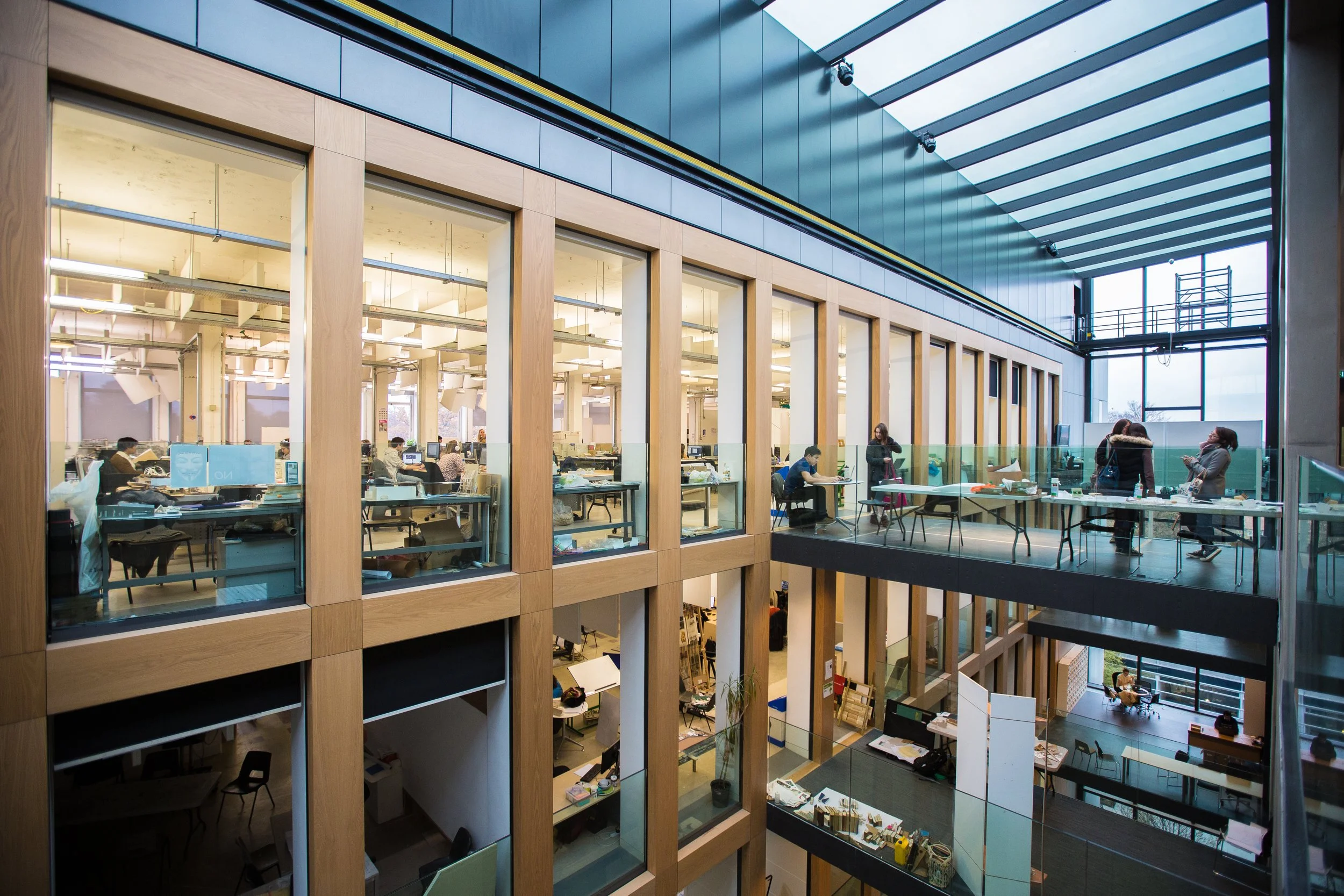
School of Architecture / School of Built Environment, Oxford Brookes University
Both the School of Architecture and the School of the Built Environment will be hosting studentships. We offer a welcoming, inclusive and supportive community based around a high-quality studio and research cultures, shaped by our passion for design, making and shaping the built environment in a socially responsible way.
-
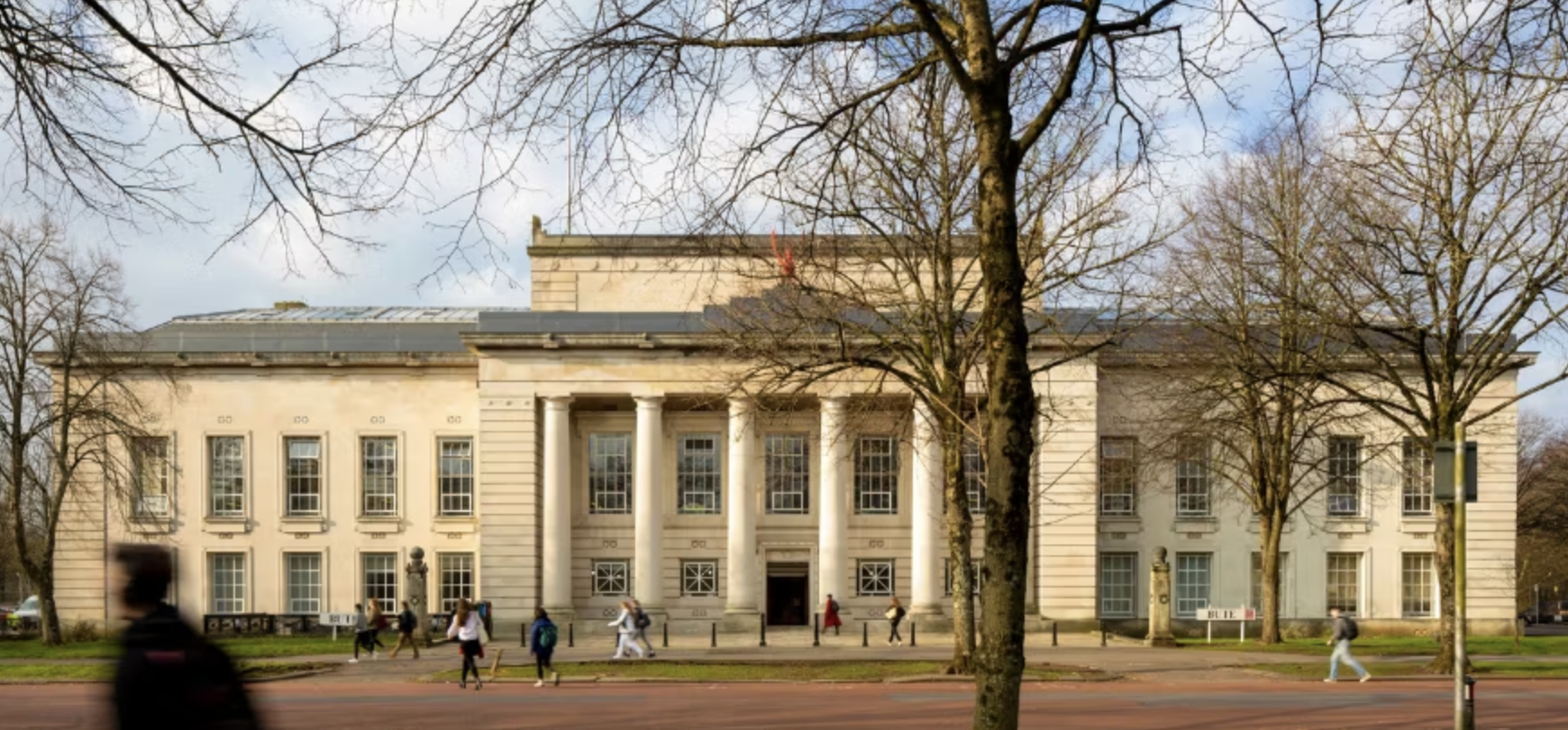
Welsh School of Architecture, Cardiff University
As a world-leading, agenda-setting institution, we foster a collaborative environment for teaching and research. Embracing the diversity and transdisciplinarity of architecture, we strive for excellence in education and research across design, the arts, humanities and sciences.
-
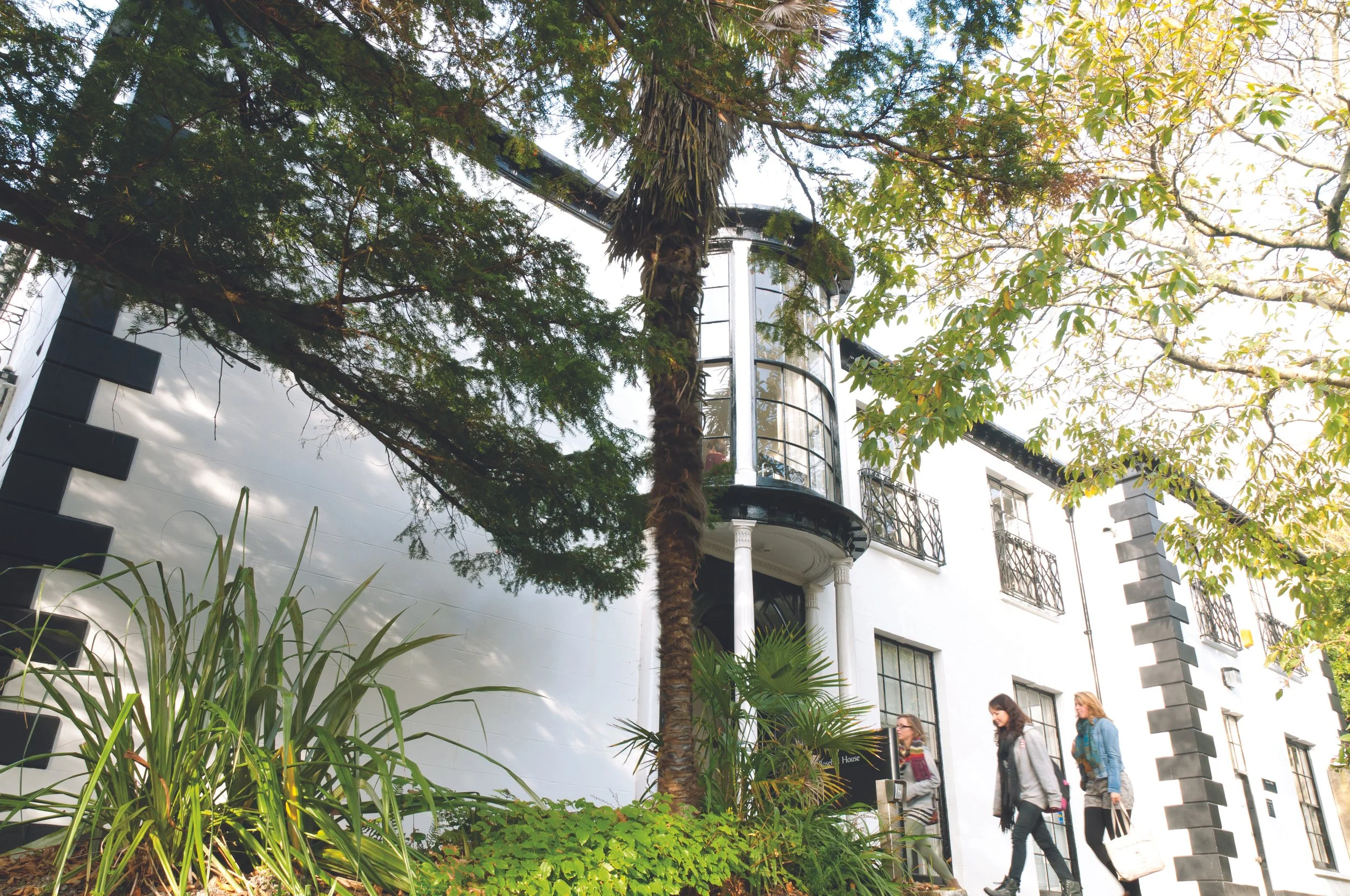
School of Architecture, Design and Interiors, Falmouth University
The School of Architecture, Design, and Interiors (SADI) aspires to lead in practice-based design innovation, addressing global challenges through human-centred design, sustainable projects, and creative applications of advanced digital tools.
Attend / Watch an information webinar …
-
Recording of the AD[A]PT Information Webinar for Prospective Applicants (via Zoom)
This session was held on:
WEDNESDAY 14th JANUARY 2026,
12pm-1.30pm GMT
In this introductory session, we introduced the opportunity, the application process and provided some top tips on how to prepare your documents. There were some questions from the audience answered at the end of the session.
Watch the Session by clicking on the link below.
-
Recording of the AD[A]PT Question & Answer Session for Prospective Applicants (via Zoom)
This session was held on:
WEDNESDAY 25th FEBRUARY 2026,
6pm-7pm GMT
In this final session before the submission deadline, the session provided applicants with a further chance to ask questions of the AD[A]PT academic team about the process and their developing proposal.
Watch the Session by clicking on the link below.
SUBMISSION DEADLINE FOR COHORT 1 HAS PASSED.
The competitive process for applications for Cohort 2 (start date of Oct 2027) will be announced in mid 2026.
————
When you have all your paperwork ready, click on the relevant institutional site to upload your application.
Make sure you apply to the correct institution.
For any technical issues uploading to the respective institutional portals, please contact the following administrators who can help you with submitting your application documents in the correct way for their institution:
For Oxford Brookes University, please email: tde-tdestudentships@brookes.ac.uk
For Cardiff University, please email: ARCHI-Research@cardiff.ac.uk
For Falmouth University, please email: PGR@falmouth.ac.uk
Please note that some of the portals have a five document upload limit, please bundle all relevant documents into no more than five pdfs.
Alternatively, if you are having trouble submitting any files, please send any extra documents you are not able to upload directly to the relevant administrators on the email above before the deadline.